Benefits
Why choose permanent outdoor lighting for your home?
• The lights are customizable • Keep your home safe • Use less energy with LEDs • Never put up Christmas lights again!
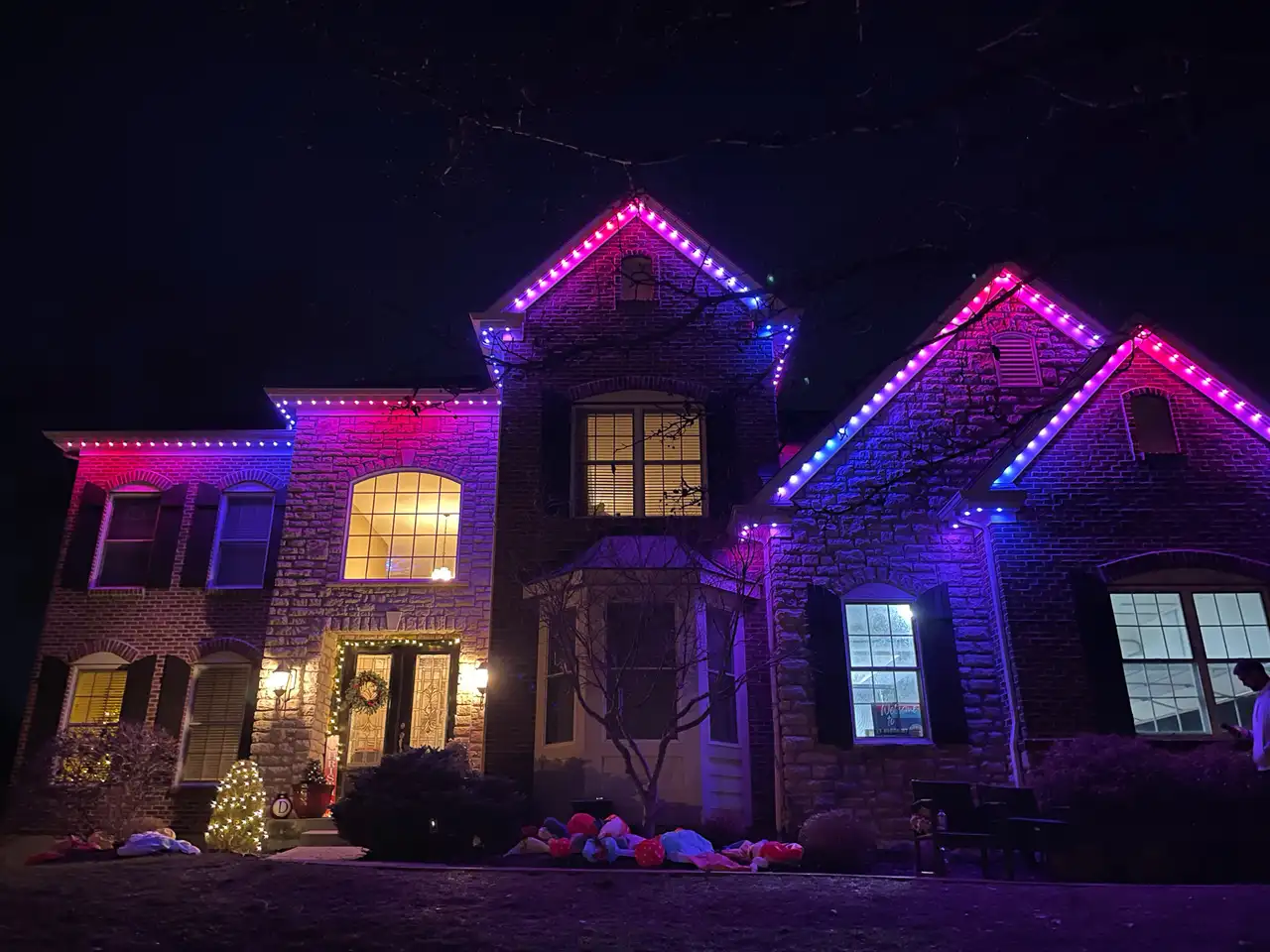
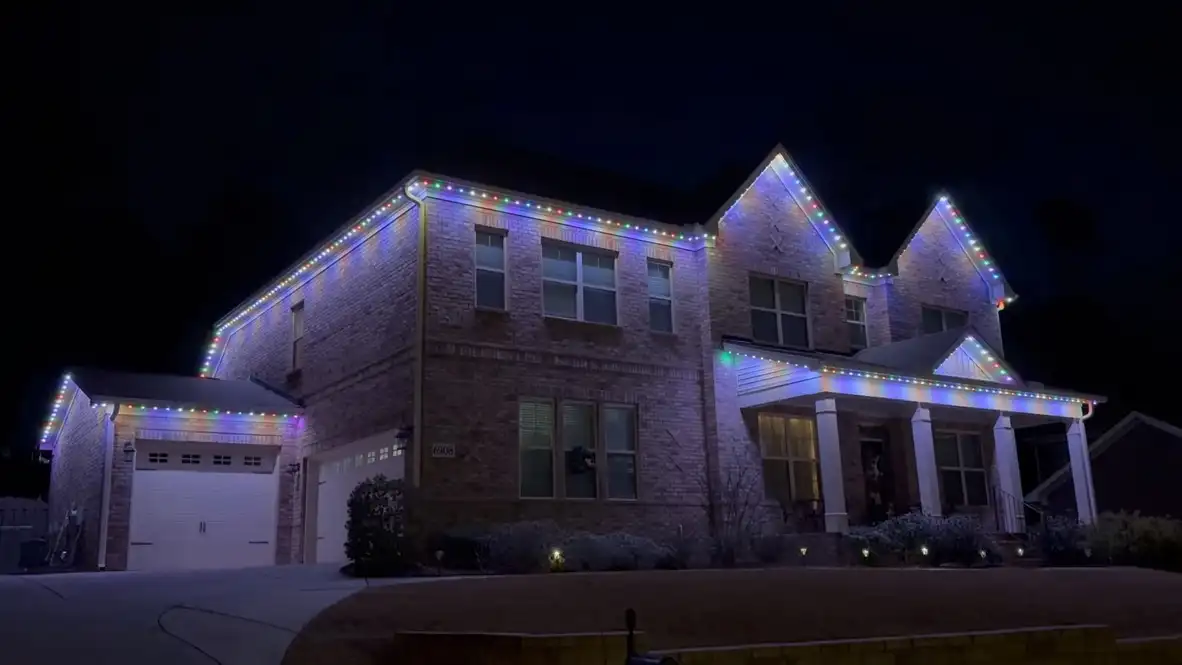
Is it possible to choose and create my own patterns?
Yes, it is! We have over 16 million color combinations and over 100 preset patterns.
What does the lighting look like during the day?
The track lighting is quite discreet and almost invisible from streetside. We can make it blend naturally into the color scheme of your house.
How long do the lights last?
Our LED lights are energy-efficient and have a lifespan of around 50K hours. LED lighting is one of the most durable lighting systems you can buy.
JellyFish Technical Specifications
Permanent lighting photos all look about the same from the street. What separates one system from another is the hardware you can't see: the voltage it runs on, the lens over each light, the track it sits in, and how it's wired. So here's exactly what goes on a Huntsville home when we install it.
Every JellyFish system we install uses the JellyFish Mark 5 light on a 48-volt system, with lights spaced 9 inches apart. We measure the house, match the track to your trim, and install and service every system from our Huntsville office.
The light
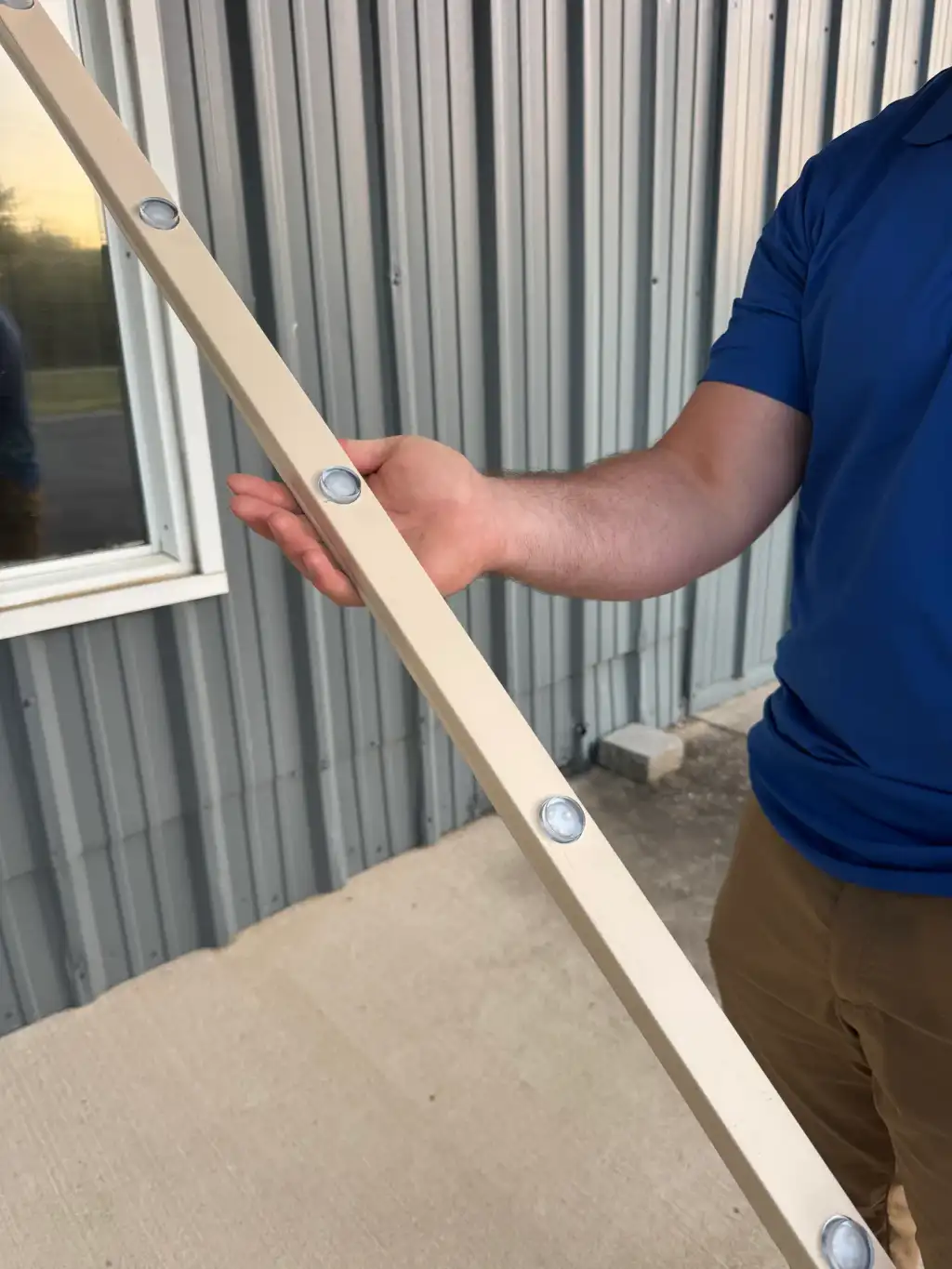
Each light is a sealed module about the size of a quarter, with three diodes behind a frosted lens.
| Spec | JellyFish Mark 5 |
|---|---|
| Diodes per light | 3 (one red, one green, one blue) |
| Brightness | Up to 21 lumens per light |
| Lens | Frosted, UV-resistant acrylic, 0.94 in across |
| Beam angle | 140° |
| Colors | 16.7 million, every light individually addressable |
| White range | 2200K to 7000K, adjustable |
| Spacing | 9 in between lights |
| Power | Under 1 W per light |
The frosted lens spreads light evenly, so you see a soft glow with no shadowing instead of a row of harsh points.
How it's powered and wired
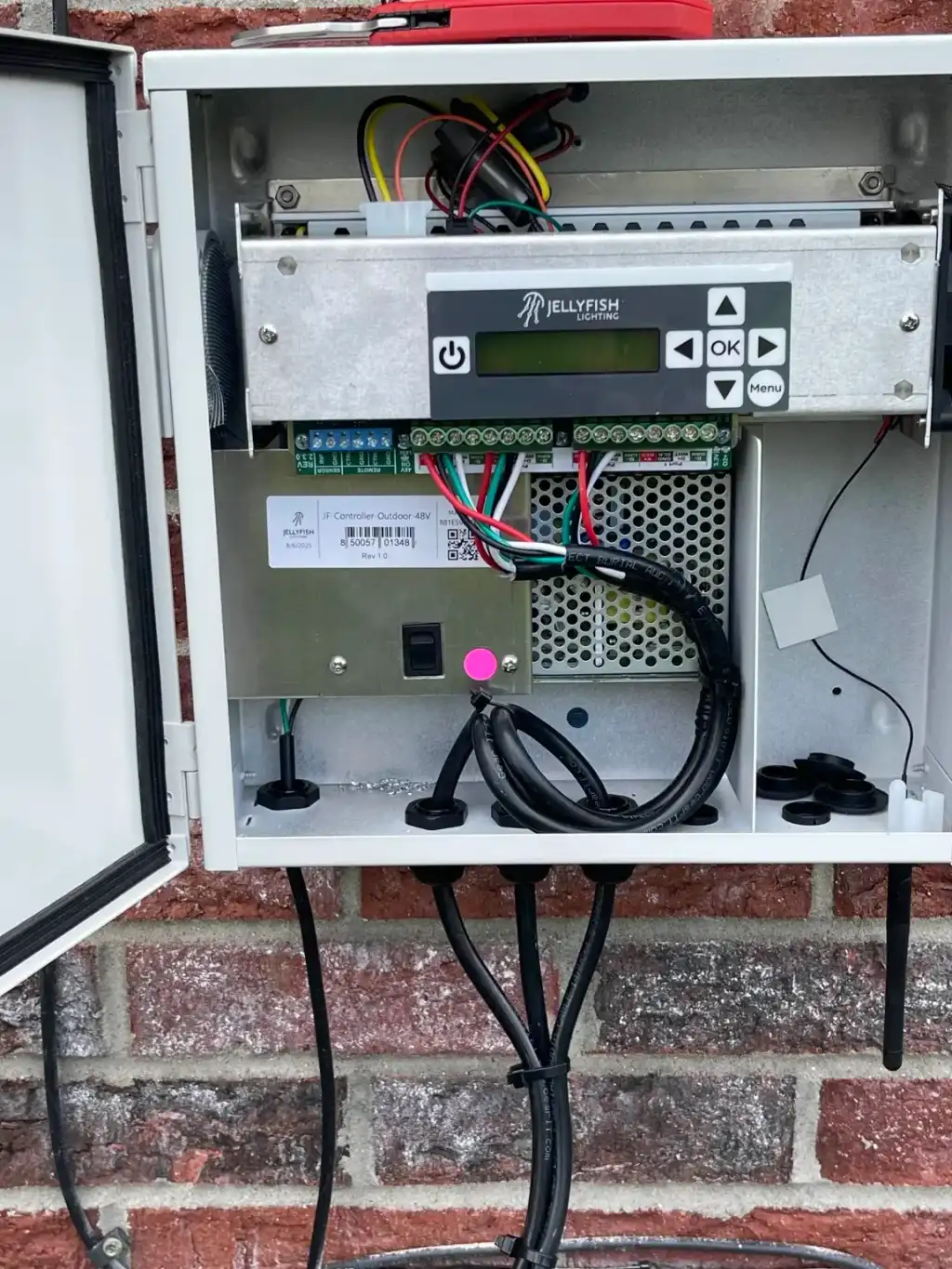
The whole system runs on low-voltage 48V DC, and every light carries a backup data line.
| Spec | Value |
|---|---|
| Operating voltage | 48V DC (low voltage) |
| Current per light | 0.019 A |
| Wiring | 4-wire: power, data, redundant data, ground; 16-gauge tin-coated copper |
| Redundant data | If one light fails, the rest of the run keeps working |
| Surge protection | Built into every light, plus surge shutoff at the controller |
| Strand | 50 lights per 37.5 ft strand, so fewer connections along the roofline |
| Run per controller | Up to 250 ft; we add a power supply on longer jobs |
Why 48V matters: At 48 volts, each light draws only 0.019 amps. That low current carries power efficiently down a long roofline, which is why one controller can run up to 250 feet of lights. Not every permanent lighting system runs at 48V, so it's a fair question to ask any installer.
Built to stay up year-round
These lights stay on the house through every season, so they're built well past anything a Huntsville summer or cold snap will throw at them.
| Spec | Value |
|---|---|
| Water rating | IP67 |
| Operating temperature | -40°F to 131°F |
| UV protection | UV-protected lights and wiring to prevent yellowing |
| Certifications | UL certified and ETL listed |
| Expected life | About 15 years, depending on use |
The track
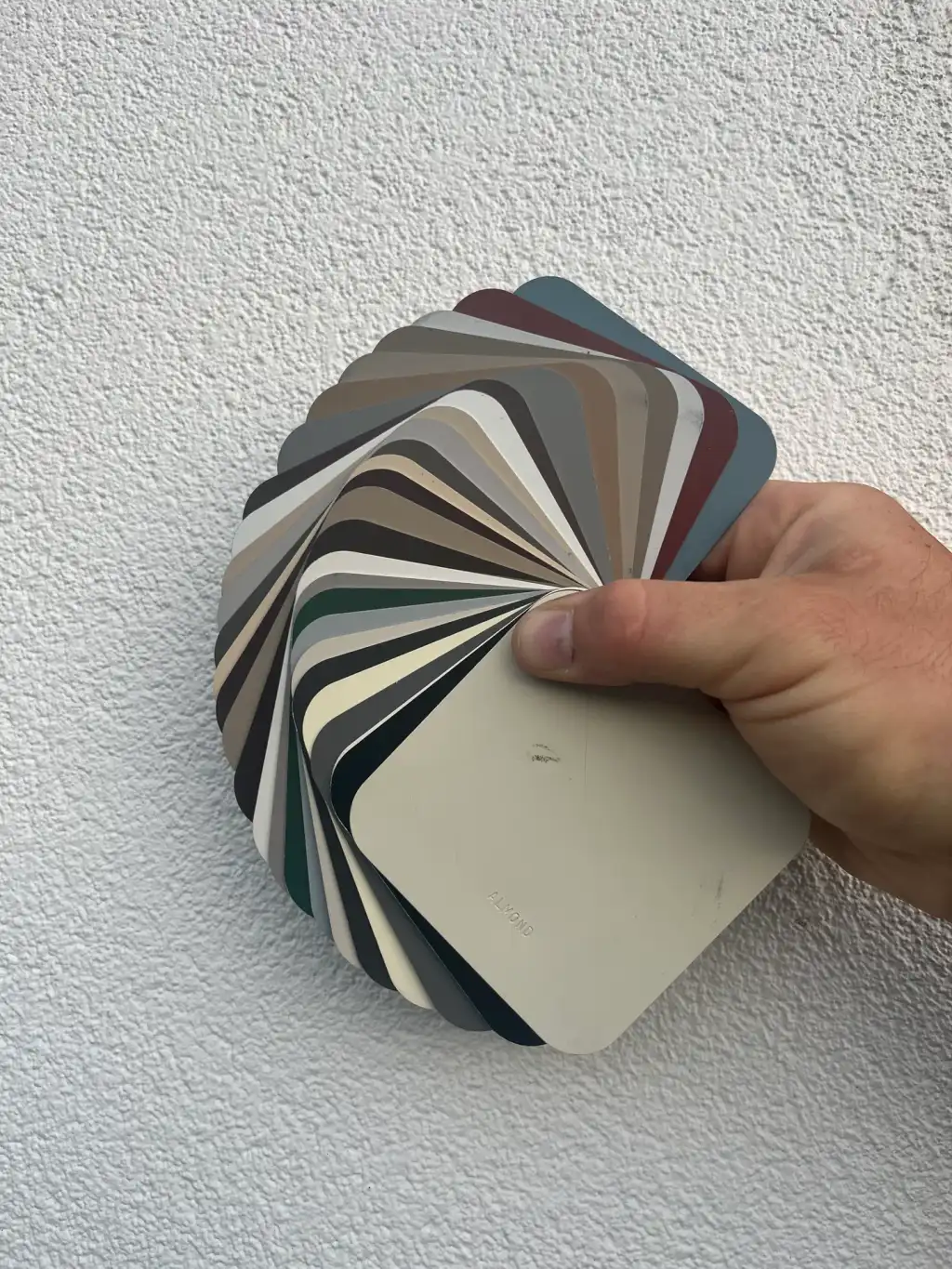
The lights sit in a 1 1/4-inch aluminum track that hides every wire. It's painted to match your soffit or fascia, so during the day it reads as trim.
| Spec | Value |
|---|---|
| Material | 0.027 in aluminum formed from factory-painted gutter coil, not thinner trim coil |
| Width | 1 1/4 in |
| Colors | 30, matched to your home at measurement |
| Weather | Won't rust, burn, or crack in cold weather |
| Mounting | Lights face straight down to cut glare and sit nearly flush |
Standard track is the most common install. When a roofline isn't a simple flat soffit, we use a different track so the lights still sit clean and face the right way:
| Track | Where we use it |
|---|---|
| Standard | Flat soffits |
| Canted | Angled soffits with a small fascia overhang |
| J-Clip | Wood and Hardie soffits and exposed rafters, with no screws through the face of the fascia |
| Fat track | Narrow soffits, gutters, beams, awnings and pergolas |
| Z-flashing | No eave overhang; tucks under the drip edge |
| Madhave | No soffit at all; lights angle 45° down |
| Radius | Turrets and round structures |
Track colors in stock: White, Black, Almond, Cameo, Charcoal Grey, Classic Cream, Copper Penny, Dark Bronze, Desert Sand, Everest, Evergreen, Harbor Grey, Linen, Montana Suede, Musket Brown, Pebblestone Clay, Royal Brown, Terra Bronze, Victorian Grey and Wicker. Ten more colors are available by special order in 2 to 3 weeks.
How we install it
The details that separate a clean install from a sloppy one are small, and they're the ones you notice every night.
- Gable peaks get a single peak light set 2 3/4 to 4 1/2 inches from the top, matched on both sides.
- Corners are mitered at 45 degrees.
- Every run starts at a corner and flows the same direction, so patterns move cleanly around the house.
- Wire runs inside walls and the attic wherever possible. Any wire outside is covered with blank track or painted to match.
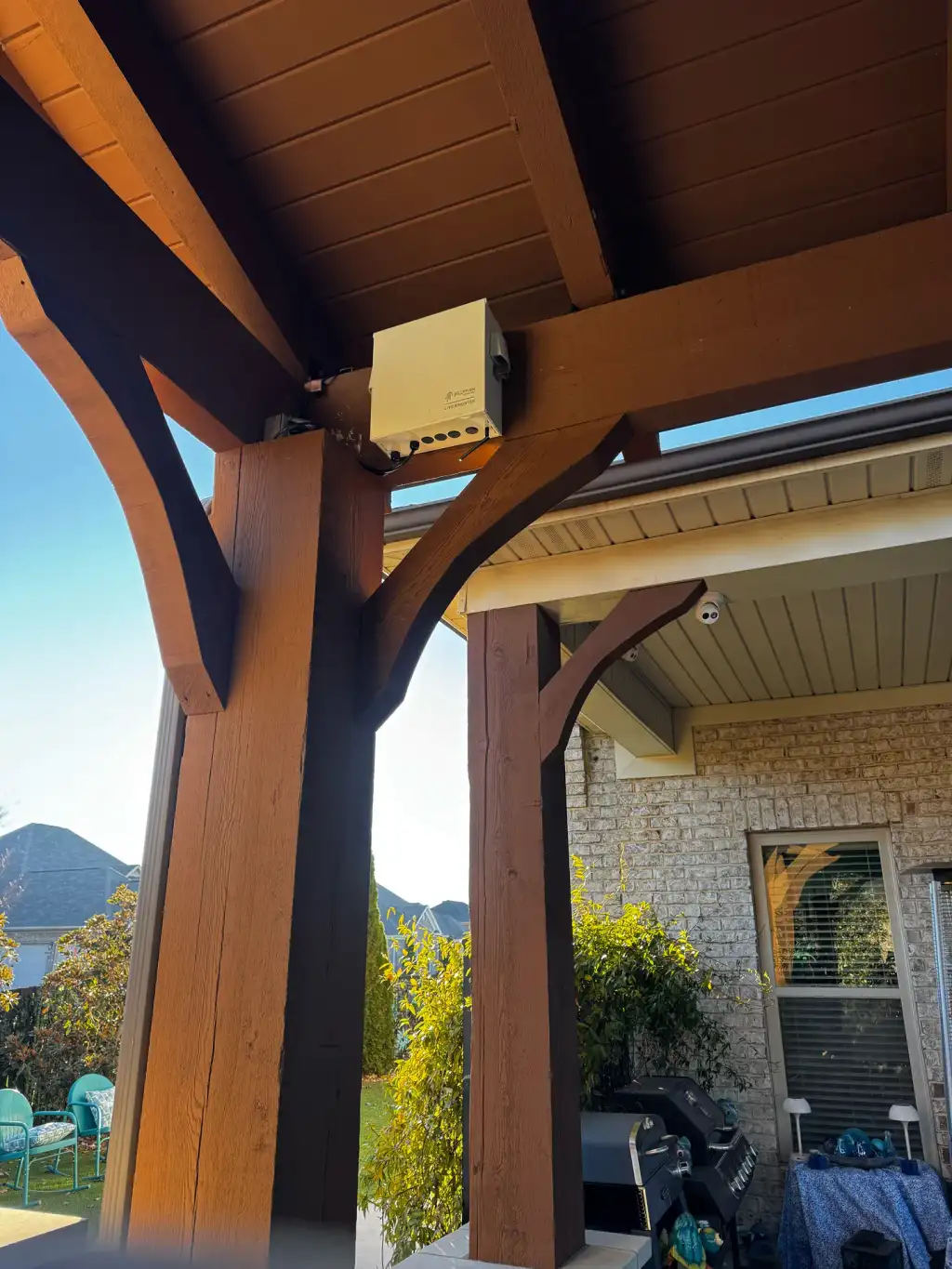
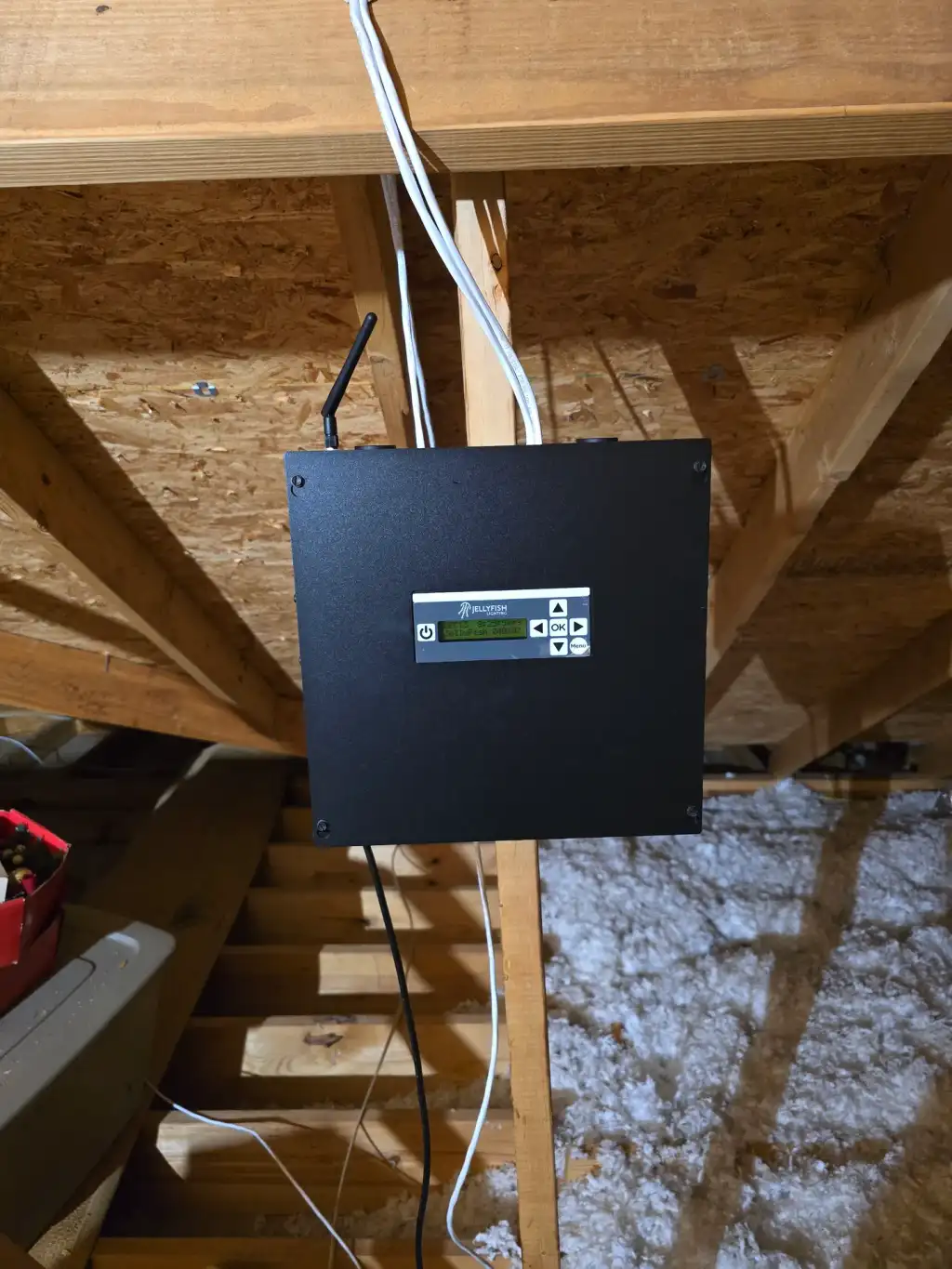
- The controller mounts inside, usually in the garage, and plugs into a standard outlet. Nothing electrical hangs under your eaves.
- Building a new home? We can prewire during construction. See home builder lighting.
Control
- JellyFish app for iPhone and Android, so you can change your lights from anywhere
- Separate zones for the front, back, or any section of the roofline
- Accent lighting: choose exactly which lights are on and what color they are
- Schedules by sunset or a set time, plus holiday events planned months ahead, so the house is ready for Christmas without anyone climbing a ladder
- Works with Alexa, Google Home, Control4 and Nice/ELAN
What it costs to run
Most of our installs fall between 140 and 200 feet of roofline. Here's what that costs each night, based on JellyFish's published power draw.
| Roofline | Lights | Full white, 6 hrs a night | Accent, 1 in 4 lights on |
|---|---|---|---|
| 140 ft | 187 | about $0.16 | about $0.04 |
| 175 ft | 233 | about $0.20 | about $0.05 |
| 200 ft | 267 | about $0.22 | about $0.06 |
Estimates use $0.14 per kWh. Your rate may be a little higher or lower. If you'd rather spread out the cost of the install itself, we offer financing.
JellyFish lighting questions
How bright are JellyFish lights?
How much power do permanent lights use?
What voltage do JellyFish lights run on?
Are the lenses frosted?
Will permanent lights hold up in Huntsville weather?
What happens if one light goes out?
Do permanent lights attract bugs?
See it on real homes
Browse our gallery of Huntsville installs, or see how JellyFish works on homes and businesses. We install across the Huntsville area, including Madison, Hampton Cove, Jones Valley, Monte Sano, Providence, Owens Cross Roads, Harvest, Meridianville and Athens. When you're ready, get a free quote.
Who this is for
Your house has straight fascia and sound gutters, like most homes built in the last twenty to thirty years in Providence, Hampton Cove, Clift Farm and Madison.
You want Christmas color, crimson and white or orange and blue on game day, and plain white the rest of the year, all from one system.
You are done reinstalling lights every year and want an upgrade that stays with the house.
What is included
✓ A home visit at no cost and a fixed quote
✓ Installation by our crew. New Age Lights is an authorized JellyFish dealer
✓ Track cut for each roofline and mounted under the eave
✓ The app installed on your phone, with time spent showing you how to save scenes
✓ Zones, schedules and millions of colors to choose from
✓ Channel color matched to the trim so the track is not obvious by day
How it works, step by step
01
Book the consult
We measure the roofline, inspect the fascia and drip edge, and decide where the controller and power supply will go.
02
See both systems
You see JellyFish next to Bosso, and we say which one fits your house, even if it costs less.
03
Install
One installation. Each zone is tested before the crew leaves.
04
Walkthrough
We set up the app together and make a few scenes, so you can run the system from day one.
Why hire a pro instead of doing it yourself
A permanent system is fixed to the house and has its own power supply, so it is not a normal DIY project. The track must be straight along the fascia or drip edge, corners must be square, and the controller needs a proper circuit. When that is done right, the track is hard to spot until the lights are on.
As an authorized dealer we use genuine parts and the system is supported. If a zone misbehaves, the crew that did the install comes back from our Huntsville office. Call (256) 530-0754 and we will tell you plainly whether your roofline is right for JellyFish.

We offer financing
We’ve partnered with Wisetack to offer our customers flexible financing options, so you can pay over time rather than all at once. The application takes about a minute to complete, and checking your options does not impact your credit score.
Financed jobs start with a $500 deposit.
*All financing is subject to credit approval. Your terms may vary. Payment options through Wisetack are provided by our lending partners. For example, a $5,500 purchase could cost $253.54 per month for 24 months, based on a 9.9% APR, or $1,833.33 per month for 3 months, based on a 0% APR. Offers range from 0 to 35.9% APR based on amount requested and creditworthiness. Not all merchants and lending partners participate in 0% interest programs. Terms range from 3 - 120 months and may vary based on merchant, lending partner, or transaction size. State interest rate caps may apply. No prepaid finance charges or participation fees. See additional terms at wisetack.com/faqs.

Where JellyFish works best around Huntsville
JellyFish is a track fixed under the roofline, so the roofline matters more than the address. It goes in most cleanly where the fascia is straight and continuous and the gutters are sound, which describes almost everything built in Huntsville this century — Providence, Hampton Cove, most of Madison, Clift Farm and the newer growth north through Harvest and Meridianville. On those houses the track sits in the trim line and you would not know it was there in daylight.
It is also the sensible answer for a defense and aerospace workforce that moves. A permanent track is fitted once, adds a feature the next owner keeps, and removes an annual ladder job on elevations that were never designed to be climbed. On Monte Sano it does something extra: a clean outline reads from the valley every night of the year rather than five weeks in December.
The argument for permanent over seasonal here is mostly weather and calendar. A wet Tennessee Valley winter is hard on temporary hardware, and the install window between late October and early December is short and busy. A track that is already up runs warm white as everyday trim, color through December, and nothing at all the rest of the time — all from your phone.