Permanent Lighting
Permanent Lighting for Huntsville Businesses and Commercial Properties
New Age Lights of Huntsville • October 2026 • Huntsville, AL • 7 min read
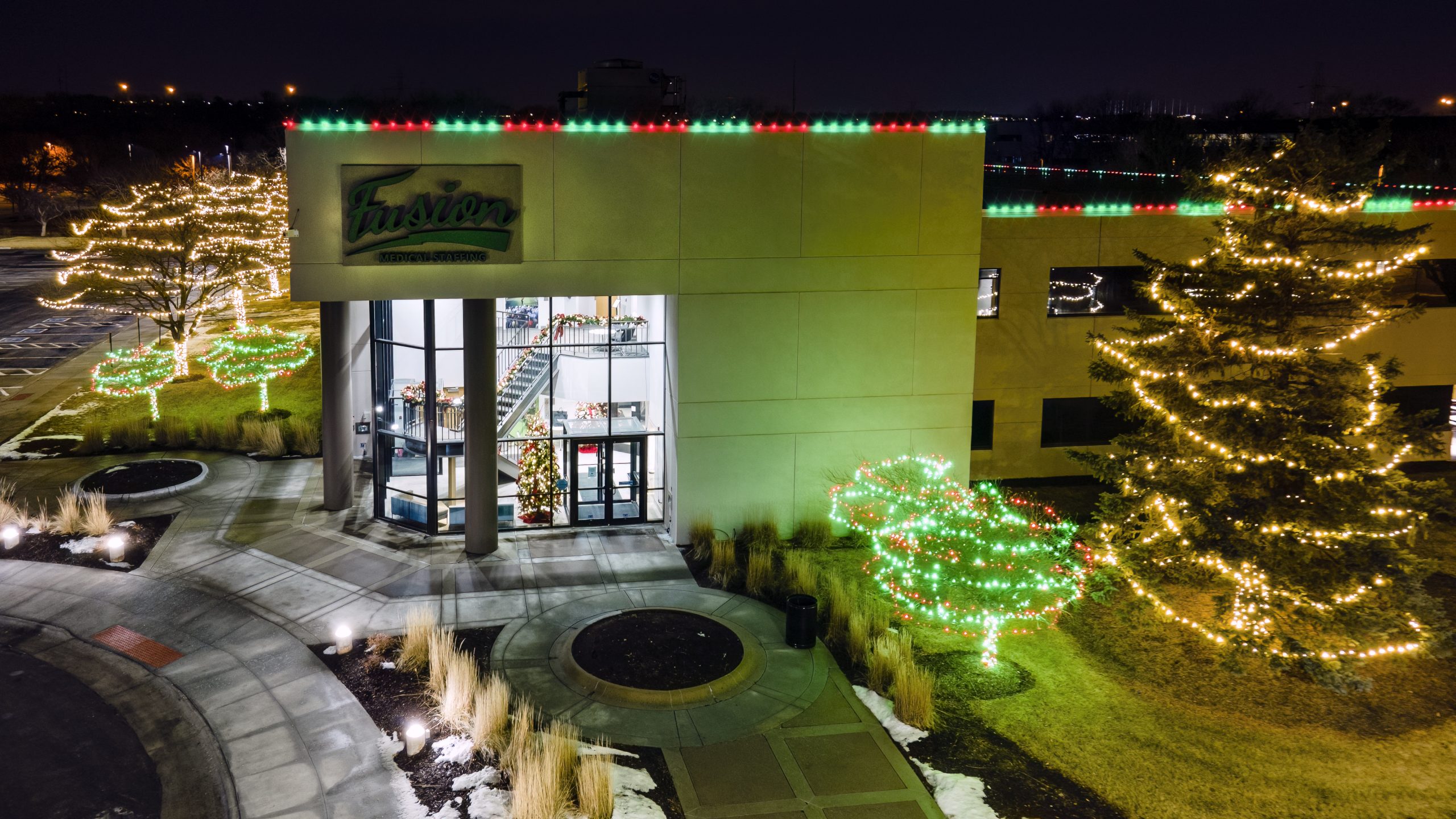
Short Answer: On a commercial property the case is operational rather than aesthetic. A permanent system eliminates an annual seasonal contract with its install and removal cycle, gives the building a consistent lit presence during the months when most customers and employees see it only after dark, and allows brand colors or event configurations without any additional work. The economics improve with the number of buildings, which is why multi building campuses and property managers tend to reach the decision faster than single site owners.
Commercial permanent lighting gets marketed with the same language as residential, which obscures that the buying decision is almost entirely different. A homeowner is buying how their house feels. A business is buying presence, wayfinding, and one fewer annual contract.
Huntsville has an unusual concentration of office, research, and mixed use property, so this question comes up here more than in comparable markets. Here is what these systems actually do on a commercial building.
The Operational Case
This is the argument that carries decisions, and it has nothing to do with how the building looks.
A seasonal lighting contract is an annual procurement. Someone scopes it, gets quotes, schedules an install window that will not disrupt operations, coordinates access, manages the vendor through the season, and schedules removal. That recurs every year and it consumes staff time that nobody accounts for.
A permanent installation eliminates the cycle. The lighting is part of the building, and the holiday configuration is a scheduled change rather than a project.
For a property manager handling multiple sites, that multiplies. Coordinating seasonal installation across a portfolio is a meaningful annual undertaking, and removing it is worth more than the lighting itself.
There is also a disruption argument. Seasonal install and removal means lifts, crews, and equipment in parking areas during business hours, twice a year, and on a retail property that timing lands during the busiest weeks.
Presence Through the Dark Months
The visibility argument is stronger on commercial property than residential, for a simple reason.
From November through February, a substantial share of the hours a business is open or occupied are dark hours. Customers arrive after dark, employees leave after dark, and the building is seen lit or not lit rather than seen in daylight.
An unlit commercial building at five thirty reads as closed whether or not it is. A lit one reads as open and attended to. For retail and hospitality that distinction affects behavior.
For office and research property the benefit is different but real. A campus that is lit consistently reads as maintained, which matters for tenant perception and for recruiting.
Brand color capability is the piece unique to programmable systems. A building can run corporate colors nightly, switch for a product launch or an event, and return, without any physical work.
Wayfinding and Safety
The practical layer, and it belongs in any commercial conversation.
Defining a building's edges at night helps people find an entrance, understand the layout of a site, and navigate a parking area. On a multi building campus, which describes a great deal of property around Research Park and the corridors leading to it, that is genuinely useful rather than decorative.
What it does not do is replace code required lighting. Egress lighting, parking lot illumination, and anything with a specification attached to it are separate systems with separate requirements, and a roofline system is an addition rather than a substitute.
That distinction matters in a commercial context in a way it does not residentially, and it is worth stating clearly in any proposal so nobody assumes a code obligation has been addressed.
Where the Economics Work Best
Not every commercial property is a good candidate, and the ones that are share characteristics.
Multi building sites benefit most, because the coordination cost of seasonal installation scales with building count while a permanent system is installed once per structure.
Properties already paying for seasonal lighting annually have the clearest arithmetic, same as residential, and commercial seasonal contracts are typically larger than residential ones, which shortens the payback.
Long term owners and occupiers benefit more than short term tenants, for obvious reasons. A business on a three year lease in a building it does not own has a different calculation, and the conversation there is usually with the landlord.
Retail, hospitality, and any property where evening customer perception matters get more from the presence side than a warehouse or a back office does.
What Changes Technically
Commercial installations differ from residential in several ways worth anticipating.
Scale is the obvious one. Longer runs mean more attention to voltage drop and to how the system is divided across transformers and controllers.
Height and access frequently require lifts rather than ladders, which affects scheduling and cost and sometimes requires coordinating parking closures.
Building types vary more than residential. Metal buildings, EIFS, masonry, and curtain wall all require different mounting approaches, and an installer should be asking about construction before quoting.
Zoning matters more, since a commercial property frequently wants different elevations treated differently, and a tenant facing side may need independent control from a street facing one.
Controls may need multiple authorized users, and on a managed property the question of who can change scenes is worth settling at installation.
Tenant Amenity and Recruiting
A softer argument that carries real weight on office and research property, which describes a great deal of what gets built around Huntsville.
Buildings compete for tenants, and tenants compete for people. A campus that presents well in the dark half of the year is a small factor in both, and it is one of the few improvements that is visible to every employee every evening from November through February.
For property managers, it is also a visible sign of investment in a building, which matters during lease renewal conversations in a way that mechanical upgrades nobody sees do not.
The related use is events. A programmable system supports a product launch, an open house, a company milestone, or a community event with a configuration change rather than a vendor engagement, and for organizations that host regularly that flexibility gets used.
Approvals
Commercial projects carry review that residential ones usually do not.
Local sign and lighting ordinances sometimes address illuminated architectural features, particularly where color or animation is involved, and the line between architectural lighting and signage is drawn differently in different jurisdictions.
Business park covenants and design guidelines frequently govern exterior alterations, and those are separate from municipal requirements.
Landlord approval is required for tenants, and a lease may address exterior modifications specifically.
Because these vary and change, confirming with the relevant jurisdiction and property authority before proceeding is the only reliable approach, and it should happen before a proposal is finalized rather than after. A commercial project that has to be redesigned after review is considerably more expensive than one that anticipated it, and review timelines on commercial work are rarely quick.
Phasing a Commercial Project
Larger properties rarely do everything at once and phasing works well when it is planned.
Starting with the primary street facing elevation or the main entrance building captures most of the visible return, which allows the rest to follow in a later budget cycle.
The requirement is that the initial installation anticipates expansion. Controllers and transformers sized with headroom, and a layout that accommodates additional runs without rework. A first phase engineered exactly to its own scope turns phase two into a larger project than it should be.
Documenting what was installed matters more on commercial property than residential, because the people managing the building in three years may not be the people who commissioned it.
What to Do Next
Total what the property spends annually on seasonal lighting, including internal staff time for coordination, which is the cost nobody has on a line item.
Decide what the lighting is actually for. Presence and brand, wayfinding, tenant amenity, or eliminating an annual contract. Those lead to different designs and different scopes.
Identify the approvals that apply, meaning municipal requirements, business park guidelines, and landlord consent if applicable, and start those before finalizing a scope.
Be clear internally that this does not satisfy any code required lighting obligation, so nobody assumes otherwise.
To discuss a commercial project, contact New Age Lights of Huntsville at 256-530-0754 or visit https://newagelights.com/huntsville-christmas-lighting-company/. We serve Huntsville, Madison, Athens, Decatur and the surrounding communities.