Permanent Lighting
Permanent Outdoor Lighting and HOAs in Huntsville: Rules, Approvals and How to Get a Yes
New Age Lights • August 2026 • Huntsville, AL • 8 min read
Why the committee cares, in its own words
An architectural review committee exists to keep a street looking like the street people bought into. It is not against light. It is against things that read as equipment in daylight, things that flash, things that look commercial, and things that keep the neighbor awake. Address those four in writing before you install and you will rarely be turned down.
Here is what committees tend to raise, roughly in order.
- Daytime appearance. Will there be a visible strip of plastic or a row of bulbs on the roofline in July?
- Color and patterns. Will the house be purple on a Tuesday? Will it flash?
- Brightness and direction. Is light aimed at the house opposite or into a bedroom window?
- Hours. Does it run all night?
- Precedent. If we approve this, what are we approving for the next twenty applications?
How a color-matched track answers the first question
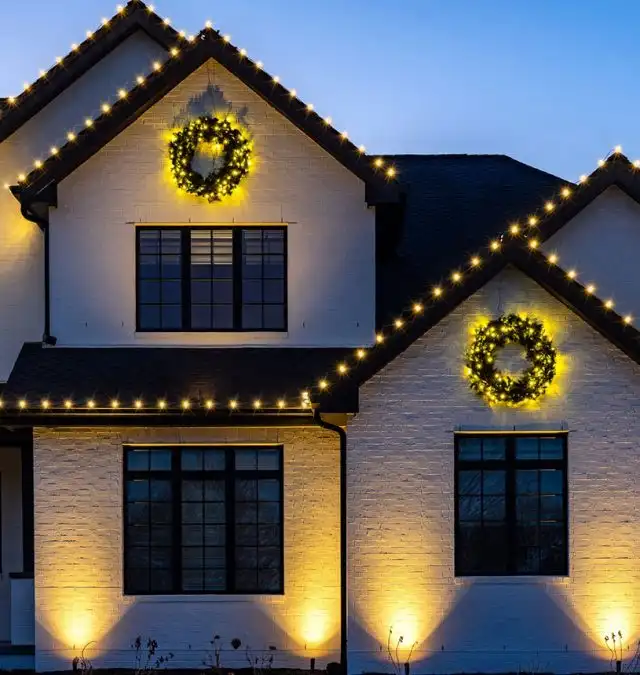
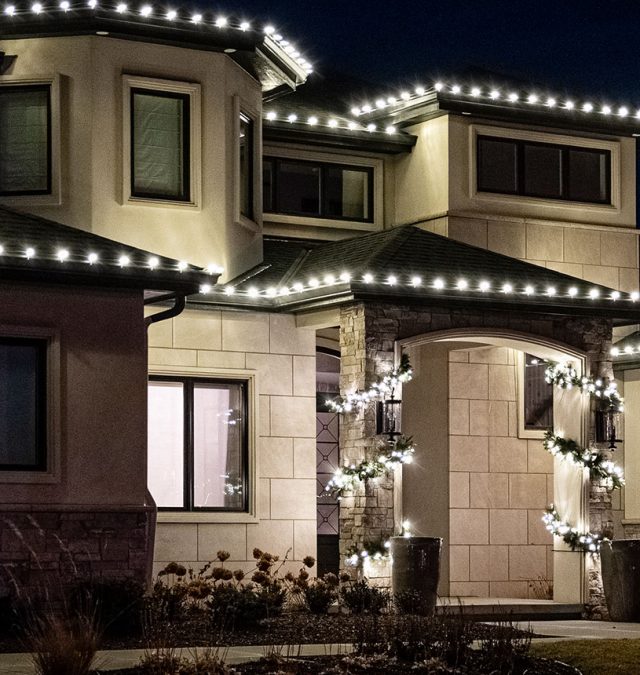
The single most useful fact in an HOA application is that the fixture disappears in daylight. Both systems we install put the lights inside a slim aluminum channel color-matched to the fascia and fixed along the trim line under the roof edge; from the sidewalk it reads as fascia. That is the difference between a permanent track and a seasonal string left up all year, which is what most covenants were written to prevent.
We supply a track color sample matched to your trim and a daytime photo of a finished install on a similar elevation. A committee member who cannot find the track in that photo has usually already voted.
Where HOAs are in the Huntsville metro
Huntsville's growth over the last thirty years has been subdivision growth, and subdivisions come with associations. The neighborhoods where we most often help with a submission are also where a track fits best; both follow modern housing.
| Area | What the housing is like | What to expect |
|---|---|---|
| Madison subdivisions | Built since the 1990s; straight fascia, two-story fronts with entry gables, tight lots | Most have an ARC. Brightness toward the house opposite is the concern on tight lots; dimming and hours settle it. |
| Providence | Planned community with strong architectural standards and a consistent streetscape | Expect a formal design-guideline process. Color match and a restrained default scene matter more here than anywhere. |
| Hampton Cove | Substantial newer homes around the golf course and ridges; association-managed common areas | Residential approval plus, for entrances and clubhouses, common-area work agreed with the association. |
| Clift Farm, Town Madison side | Newest housing in the metro; mixed residential and retail | Rules still being applied for the first time on many streets; a clean submission sets the precedent. |
| Harvest and Meridianville new subdivisions | Newer builds on wide lots, set back from the road | Associations vary; set-back frontages mean brightness toward neighbors is rarely an issue. |
| Owens Cross Roads subdivisions | Newer building spilling from Hampton Cove alongside acreage | Subdivision streets often have an ARC; acreage properties usually do not. |
Older in-town neighborhoods such as Blossomwood and Monte Sano generally have no HOA in the subdivision sense; parts of Five Points fall inside a historic district, covered below.
What to submit
Committees approve applications that make the decision easy. Ours usually has seven items; we supply the technical ones at the free consult, and you write the schedule and pattern statement.
| Item | Why the committee wants it |
|---|---|
| Manufacturer spec sheet | Shows a low-voltage, UL-rated, dealer-installed product rather than retail strip lights |
| Track color sample or color name | Proves the fixture matches the fascia and disappears in daylight |
| Elevation photo or mockup showing the run | Shows which edges are lit and that nothing is on the roof itself |
| Proposed default schedule and hours | Answers the "all night" concern; e.g. warm white dusk to a stated end time |
| Statement on colors and patterns | Commits to static or slow patterns and reserves color for holidays and game days |
| Controller location and wire route | Confirms the controller is in the garage and wiring is concealed |
| Installer insurance | Standard for any exterior contractor working at height |
Conditions you may be asked to accept
A yes often comes with terms, and the app makes each easy to live with.
- Default to white on ordinary nights. Set warm white as the everyday scene on a dusk-to-late schedule; Bosso runs sunrise and sunset timers and recurring schedules, JellyFish schedules from its cloud app.
- Color only in windows. Some committees allow color during holiday periods and on game days; save the scenes and schedule them for those dates.
- No flashing or fast chase. Static and slow-fade patterns only. Both systems have plenty.
- An end time. Lights off or dimmed at a stated hour; the schedule enforces it.
- Brightness cap. Both apps dim; on the tight lots in Madison a reduced-brightness scene still reads from the street.
Accepting these costs you little in practice. Most Huntsville customers run warm white 300 nights a year anyway, and crimson at kickoff is still available; game day lighting in Huntsville covers how to do that without upsetting the street.
Common objections, and honest answers
"It will look like a business."
A commercial installation at Bridge Street or Town Madison runs bright, multi-color and late because that is what a storefront wants. A residential system with a warm-white default and a stated end time looks like architectural lighting, which most covenants encourage. The difference is the schedule, and the schedule is in the application.
"It will damage the roof and we will get complaints."
The track fastens to the fascia or under the drip edge, the same surface the gutters hang from, and nothing goes through roofing material. The detail is in our guide to permanent lighting and roof damage, and it is worth attaching.
"If we approve one, we approve them all."
True, which is why the first application on a street should be a good one. A committee can approve the product category with conditions on use, giving it a standard for the next twenty applications instead of twenty arguments.
"The covenants say no exterior lighting changes."
Read the exact wording. Many covenants restrict fixture types, colors or placement rather than banning lighting, and most allow architectural lighting with approval. If yours is genuinely a ban, a seasonal program inside the association's holiday window may be the better answer, and we will say so.
Historic districts are a different conversation
Twickenham is the largest antebellum historic district in Alabama, Old Town next to it is Victorian, and Five Points has its own designation. These are not HOAs. Exterior changes visible from the street there typically go through the city's historic preservation review, and the standard is preserving historic fabric rather than keeping a subdivision uniform.
That changes the answer. A permanent fixture on an 1830s cornice or a deep Victorian eave is precisely what that review exists to consider, and it may not be approved. Those houses also have metal and slate roofs and piecemeal gutter, so the track may not seat discreetly in any case. On many of them the honest recommendation is a seasonal display designed around the trim and taken down in January. We ask for district rules before designing, and we say so at the consult if the house is not a track house.
Timeline and how we fit around it
Many committees meet monthly, so allow at least one cycle. Book the free consult first so you have the spec sheet, color match, mockup and controller plan to submit; send the application; order once approval is in hand. Track takes one to two weeks to arrive and most installs are done in a day, so approval one month typically means lights on the next.
The quote is fixed before anything is ordered and does not change while you wait. If the committee asks for a different track color or a shorter run, we revise inside the rules.
Associations as customers
The same committees often manage entrances, clubhouses and common areas of their own, and permanent lighting suits those better than an annual rehang: Hampton Cove's association frontage, subdivision entrances across Madison and Harvest, the newer common areas in Clift Farm. We survey the property, quote one number, schedule around access, and design to the board's own rules. Details are on our commercial and HOA lighting page; the seasonal version is in commercial and HOA Christmas lighting in Huntsville.
The JellyFish Lighting site carries the spec sheet most committees ask for, and our residential lighting page describes the install.
Frequently asked questions
Do I need HOA approval for permanent outdoor lighting?
In most Huntsville subdivisions with an architectural review committee, yes, because a permanent track is a fixed exterior change. Check your covenants and design guidelines for exterior lighting or exterior modifications. Even where the rules are silent, a short courtesy submission before installation avoids a dispute afterward.
What do HOAs usually object to about permanent lights?
Daytime visibility of the fixture, color changes and flashing patterns on ordinary nights, brightness aimed at neighboring homes, late hours, and the precedent of one house looking commercial. A color-matched track that disappears in daylight, a default warm-white schedule with an end time, and a written commitment to static patterns answer nearly all of it.
What should I submit to my architectural review committee?
A manufacturer spec sheet, a track color sample or the color name matched to your fascia, a photo or mockup showing where the track sits on your elevation, your proposed default schedule and hours, a statement on patterns and colors for ordinary nights, the controller location and wire route, and your installer's insurance details. New Age Lights supplies the technical items at the consult.
Can my HOA ban permanent lighting entirely?
Covenants vary and some associations restrict exterior lighting types or colors. Read yours before you book. In practice most committees regulate how a system is used rather than banning it, because the fixture itself is not visible and the covenant concern is appearance. If yours is strict, a seasonal program may be the better fit and we will say so.
Are historic districts the same as HOAs?
No. Twickenham, Old Town and Five Points are locally designated historic districts, and exterior changes visible from the street there typically go through the city's historic preservation review rather than a private association. The standard is preserving historic fabric, not neighborhood uniformity, and a permanent fixture on an antebellum cornice may not be approved; a well-designed seasonal display is often the right answer there.
How long does HOA approval take, and when should I book the install?
Many committees meet monthly, so allow at least one meeting cycle. Book the free consult first so you have the spec sheet, color match and mockup to submit, then order once approval is in hand. Custom track takes one to two weeks to arrive and the quote is fixed either way, so waiting for the committee costs you nothing.
Bring your covenants to the consult
We design inside the rules from the start, supply the spec sheet, color match and mockup for your application, and hold the quote while your committee meets.
Get a free quote or call (256) 530-0754.